Indian Spices
From Farm to Global Market: The Journey of Indian Spices
Discover the journey of Indian spices from farms to global markets. Explore how turmeric, red chilli, cumin and other spices are sourced, processed, quality-checked, packaged and exported to international buyers.
From Farm to Global Market: The Journey of Indian Spices
Category: Indian Spices & Export Insights
Suggested URL: /blogs/journey-of-indian-spices-from-farm-to-global-market
Meta Title: Indian Spices Export: From Farm to Global Market | Spices Origin Exim
Meta Description: Explore how Indian spices are sourced, processed, quality-checked and exported to global markets. Discover the journey of turmeric, red chilli, cumin and more.
Introduction
India has a long history of cultivating and trading spices, with its diverse climate, fertile agricultural regions and traditional farming practices supporting the production of a wide variety of aromatic spices. From the golden fields of turmeric to the vibrant red chilli farms and fragrant cumin-growing regions, Indian spices are an important part of the global food supply chain.
Today, Indian spices are used by food manufacturers, wholesalers, retailers, restaurants and distributors across international markets. Their distinctive flavours, aromas and versatility make them essential ingredients in cuisines around the world.
At Spices Origin Exim, we connect India's agricultural sourcing regions with international buyers by supplying a range of Indian spices and agricultural products according to specific quality, packaging and export requirements.
1. India: A Diverse Source of Spices
India produces a wide range of spices, with different regions known for particular varieties and characteristics.
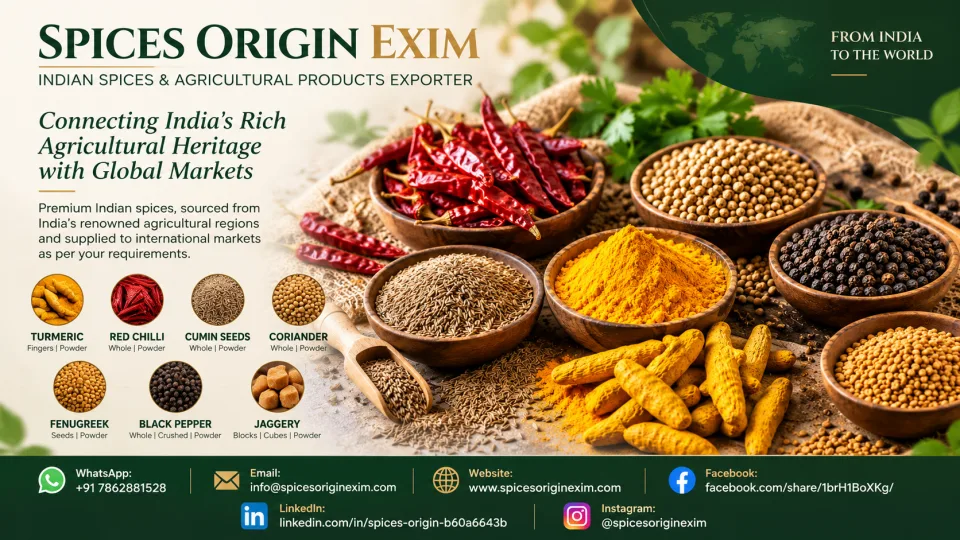
Some of the key Indian spices supplied to international markets include:
Turmeric: Known for its golden-yellow colour and earthy flavour, turmeric is widely used in food processing, seasoning blends and traditional cuisines.
Red Chilli: Available in different varieties, colours and heat levels, red chilli is used in spice blends, sauces, seasonings and food manufacturing.
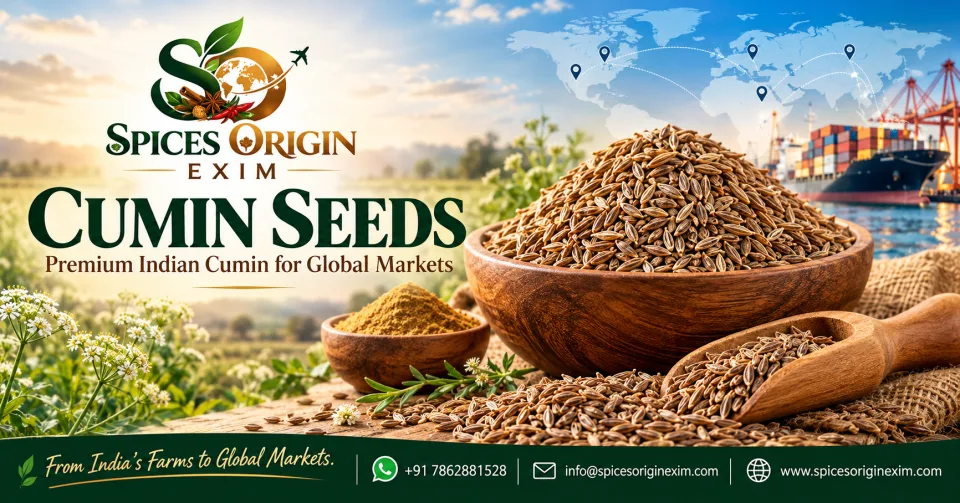
Cumin Seeds: Recognised for their warm, distinctive aroma, cumin seeds are commonly used in seasoning, curry powders and packaged foods.
Coriander Seeds: Valued for their mild citrus-like aroma, coriander is used whole, crushed or ground in numerous culinary applications.
Black Pepper: Known for its sharp flavour and pungency, black pepper is widely used in food processing, seasoning and retail spice products.
Fenugreek Seeds: These seeds have a characteristic aroma and slightly bitter taste and are used in spice blends, pickles and food preparations.
India's varied agricultural regions allow buyers to source different spice varieties, grades and product forms based on their requirements.
2. From Agricultural Farms to Export Markets
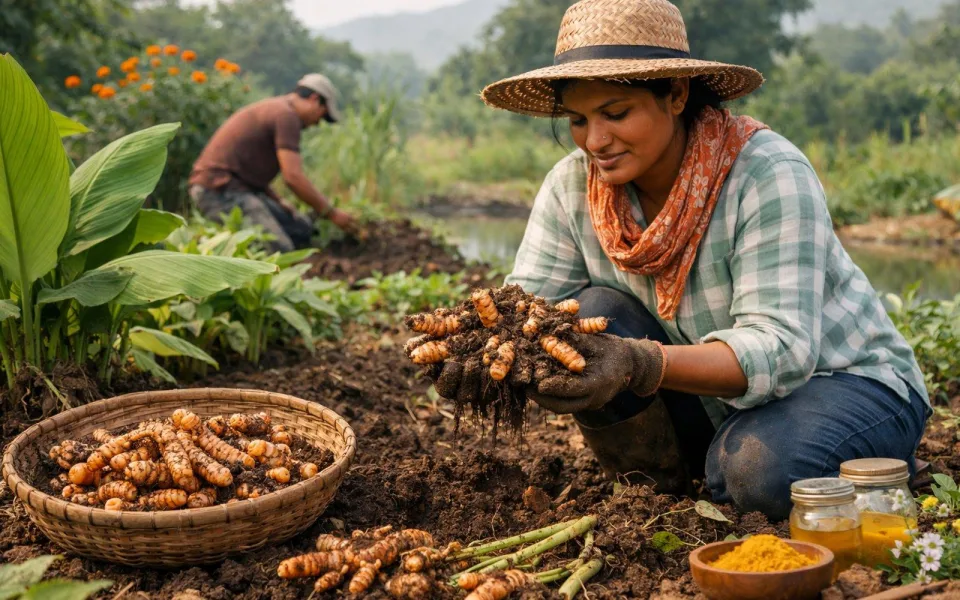
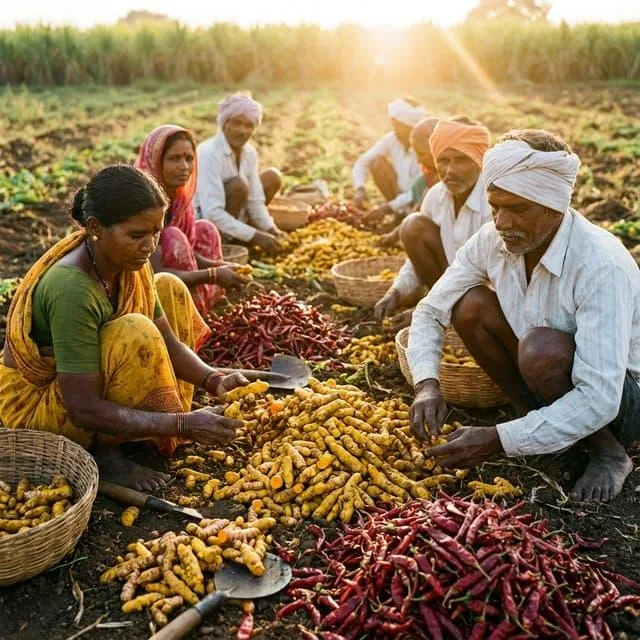
The journey of Indian spices begins at the farms, where cultivation, harvesting and post-harvest handling play important roles in determining the quality of the final product.
Spices are harvested according to the crop and its maturity. After harvesting, they may undergo cleaning, drying, sorting and grading to prepare them for further processing or packaging.
For example, turmeric fingers are generally boiled and dried before being polished or processed into powder. Red chillies are dried to achieve suitable moisture levels, while cumin and coriander seeds are cleaned and graded to meet buyer specifications.
Proper handling and storage help preserve the natural aroma, colour and quality of spices before they enter the export supply chain.
3. Processing and Product Preparation
Processing requirements differ depending on the spice, its intended application and the destination market.
Common product forms include:
Whole spices
Cleaned and graded seeds
Ground spice powders
Crushed spices and flakes
Buyer-specific grades and specifications
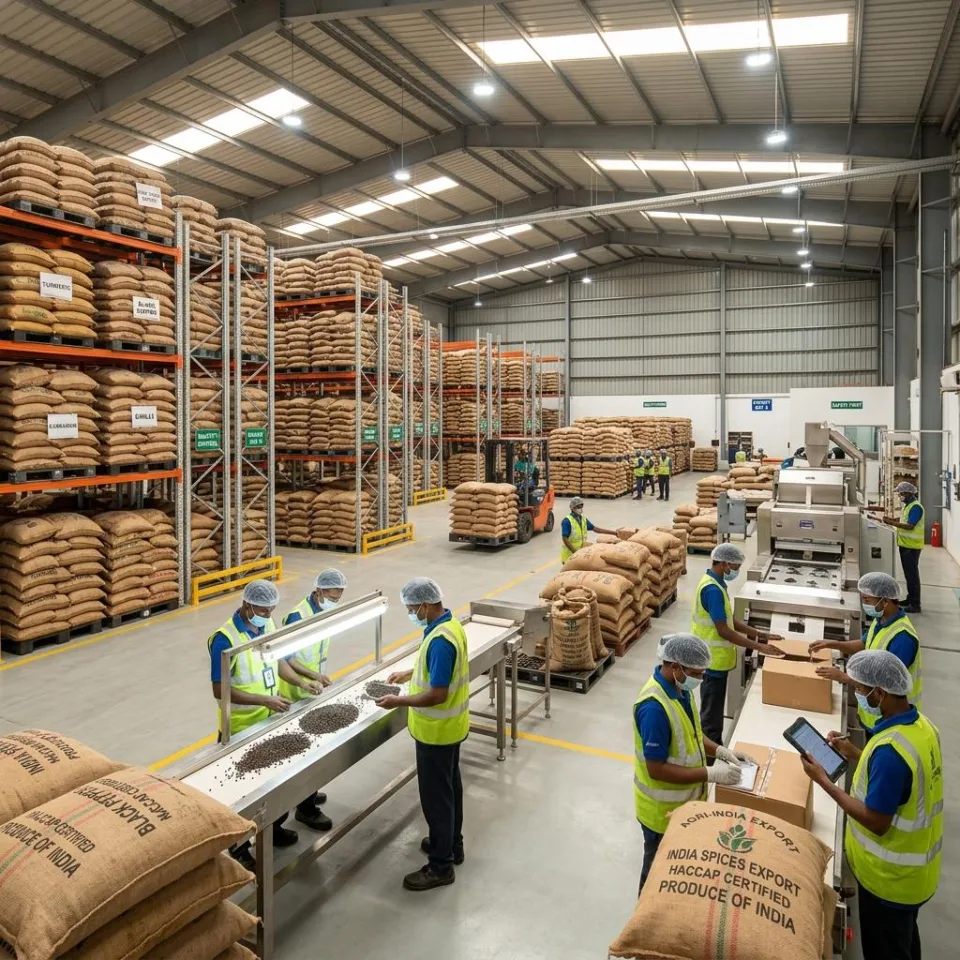
Processing may involve mechanical cleaning, sorting, grinding, sieving and other suitable operations. The objective is to prepare a consistent product that meets the agreed requirements of the buyer.
For bulk international orders, specifications such as product form, size, colour, moisture, purity and packaging should be confirmed before processing and dispatch.
4. Quality Control and Food Safety
Quality assurance is an important part of international spice trade. Buyers need products that meet their agreed specifications and applicable food safety requirements.
Depending on the product and destination market, quality parameters may include:
Moisture content
Foreign matter and extraneous material
Purity and cleanliness
Colour, aroma and appearance
Microbiological parameters
Pesticide residue limits
Heavy metal limits
Aflatoxins, where applicable
A Certificate of Analysis (COA) can provide laboratory test results for specified parameters. Independent laboratory testing may also be arranged when required by the buyer.
At Spices Origin Exim, product specifications are agreed with buyers before order confirmation, and pre-shipment inspections and laboratory testing can be arranged according to the requirements of the consignment.
5. Export Packaging for International Buyers
Packaging is an important consideration in the international spice supply chain. The appropriate packaging depends on the product, quantity, storage conditions, transportation method and destination-market requirements.
Common packaging options include:
25 kg bags: Suitable for many wholesale and food manufacturing requirements.
50 kg bags: Used for certain bulk shipments, subject to product handling and buyer specifications.
Retail packaging: Smaller consumer packs with market-specific labelling.
Private-label packaging: Packaging prepared according to the importer's branding and product requirements.
Food-grade inner liners and suitable outer packaging can help protect spices against moisture, contamination and handling damage during storage and transit.
Packaging materials, labelling, net weight and other details should be finalised before shipment to meet the buyer's specifications and applicable regulations.
6. Export Documentation and International Shipping
Exporting spices involves coordinating documentation, logistics and customs requirements to support the smooth movement of goods from India to the destination country.
Depending on the shipment and destination, documents may include:
Commercial Invoice
Packing List
Certificate of Origin
Bill of Lading
Phytosanitary Certificate, where applicable
Certificate of Analysis, where required
Other destination-specific certificates and declarations
The applicable documentation depends on the product classification, importing country's regulations and the agreed shipment terms.
International buyers may request quotations under different Incoterms, such as:
FOB (Free On Board): The seller delivers the goods on board the nominated vessel at the agreed port of shipment, with costs and risks allocated according to the applicable Incoterm.
CFR (Cost and Freight): The seller pays the cost and freight to the named destination port, while risk transfers when the goods are on board the vessel at the port of shipment.
CIF (Cost, Insurance and Freight): Similar to CFR, but the seller also arranges the required cargo insurance for the buyer's benefit.
Selecting the appropriate shipping terms helps importers and exporters understand their respective responsibilities, costs and risks.
7. Supplying Indian Spices to Global Markets
Indian spices are traded across many international markets, where they serve different industries and consumer needs.
Importers, wholesalers, food manufacturers, seasoning companies, distributors and retail brands may require different product forms, grades, packaging and documentation.
Spices Origin Exim focuses on serving international buyers across markets including North America, Europe, the Middle East and Asia-Pacific. Each inquiry can be assessed according to the product, quantity, destination and applicable import requirements.
Our approach is centred on origin-focused sourcing, buyer-specific specifications, suitable packaging and export documentation support.
8. Why Choose a Specification-Based Sourcing Partner?
Successful international spice sourcing requires more than identifying a product and its price. Buyers also need clarity regarding product quality, consistency, packaging, documentation and shipment coordination.
A specification-based sourcing process can help buyers:
Define product grades and quality parameters before ordering.
Confirm packaging and labelling requirements.
Arrange suitable inspections and testing.
Understand export documentation requirements.
Compare quotations under clearly defined shipping terms.
Coordinate shipments according to agreed timelines.
At Spices Origin Exim, we aim to make the sourcing and export process transparent through written specifications, clear communication and shipment coordination from inquiry to dispatch.
Conclusion
The journey of Indian spices from farms to international markets involves several important stages, including cultivation, harvesting, processing, quality inspection, packaging and export logistics.
Each stage contributes to the quality and suitability of the final product. For international buyers, working with a sourcing partner who understands product specifications, export documentation and destination-market requirements can help simplify procurement.
Spices Origin Exim is committed to connecting international buyers with Indian spices and agricultural products, with sourcing and supply arrangements tailored to their requirements.
Source Indian Spices with Spices Origin Exim
Looking to source turmeric, red chilli, cumin seeds, coriander seeds, black pepper, fenugreek or other Indian agricultural products?
Contact us with your required product, grade, quantity, packaging preferences and destination country to discuss sourcing and export quotations.
Spices Origin Exim
Website: https://www.spicesoriginexim.com/
Email: info@spicesoriginexim.com
WhatsApp: +91 7862881528