Quality & Standards
How to Read a Spice Certificate of Analysis
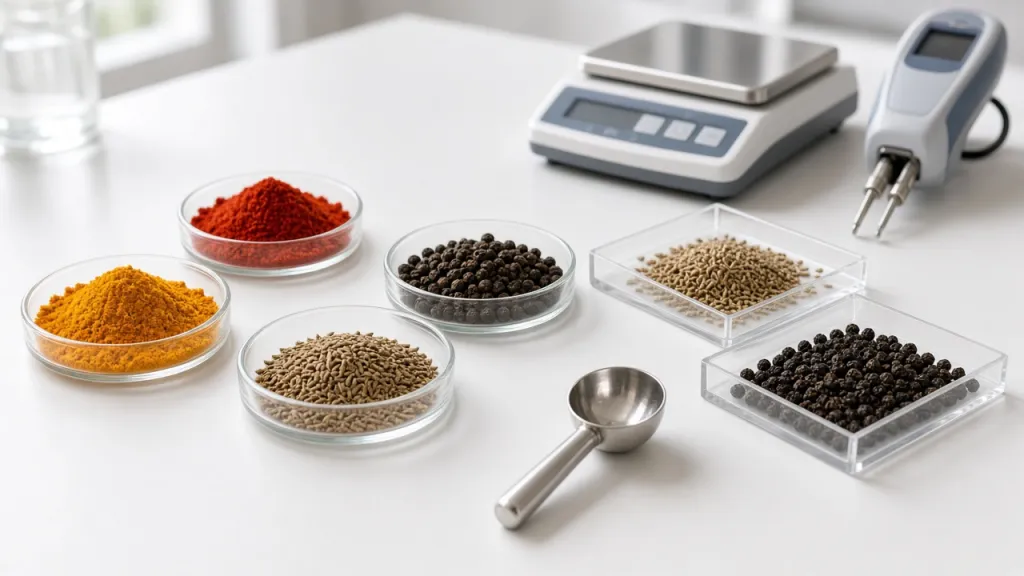
The parameters most buyers check on a spice COA, and how to align them with your own specification.
A certificate of analysis (COA) reports how a specific lot performed against a set of tests. It is only as useful as the specification it is measured against, so agree the parameters before the lot is prepared.
Physical parameters
- Moisture: affects shelf life and the risk of mould. Buyers usually set a maximum.
- Purity or extraneous matter: the share of the lot that is the spice itself, rather than stems, stones or other seeds.
- Total and acid-insoluble ash: indicators of mineral content and soil contamination.
Quality markers
Many spices have a characteristic marker, for example curcumin in turmeric, volatile oil in seed spices, or colour value and pungency in chilli. These vary by origin and season, which is why they are confirmed per lot rather than promised in advance.
Food safety parameters
- Microbiology, such as total plate count, yeast and mould, and pathogens.
- Pesticide residues against the importing country's maximum residue limits.
- Aflatoxins and other mycotoxins where relevant.
Practical advice
Send your specification sheet with the enquiry. We will arrange testing against those parameters through an accredited laboratory, and share the report before shipment where the contract requires it.